Summary
The AI & Cyber onAir hub is an online community that brings together AI & cybersecurity experts, organizations, students, and anyone interested in cybersecurity. To LEARN more about the field… DISCUSS relevant issues … and ENGAGE in positively addressing Cyber challenges.
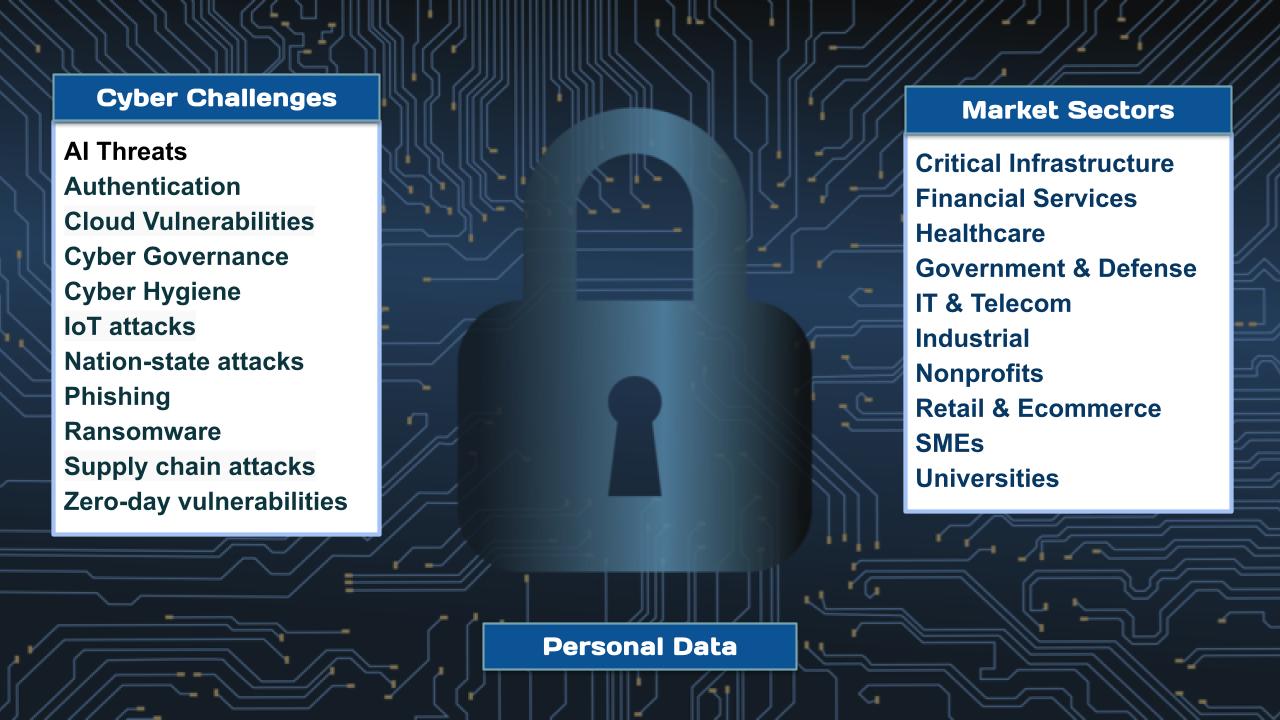
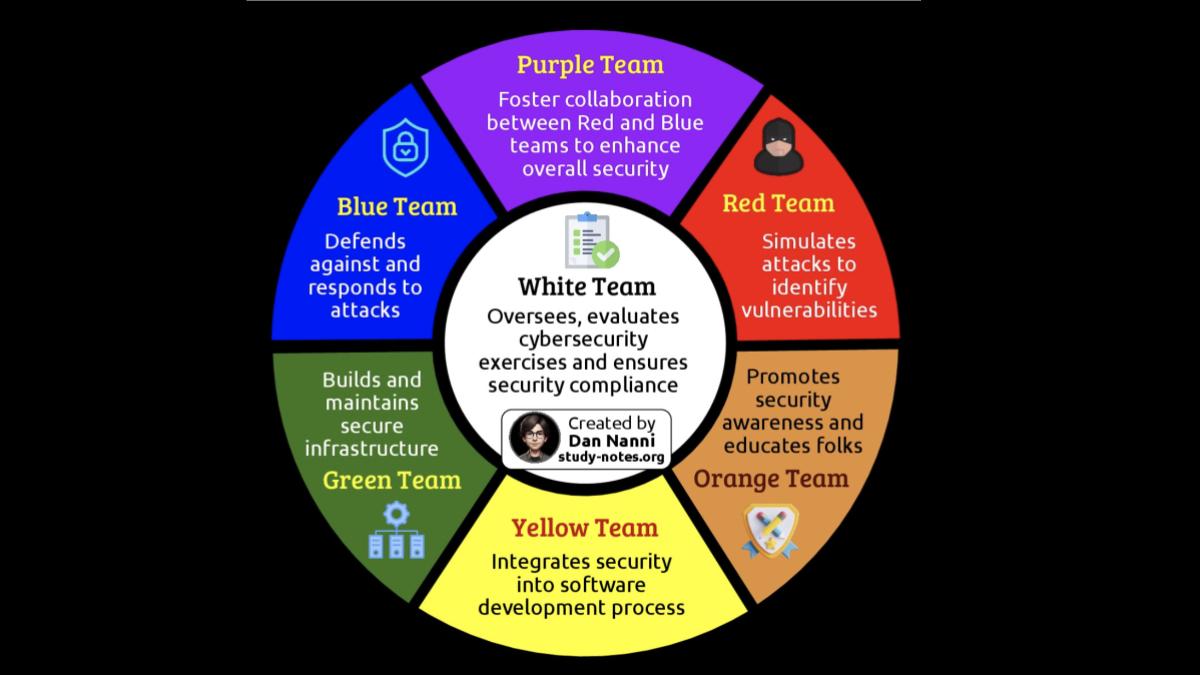
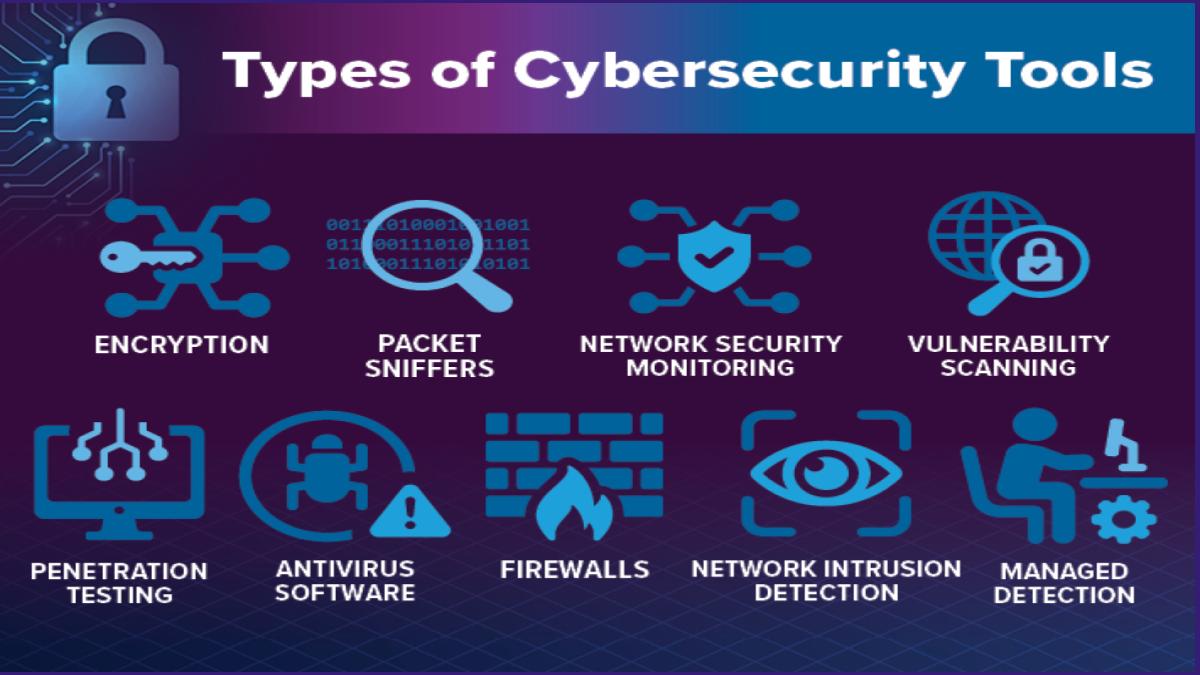
With our human-curated, AI-assisted onAir Knowledge Network platform, people can share and evolve cybersecurity knowledge about AI & Cyber Challenges, Cyber Teams, Cyber Tools, and online cybersecurity Competitions … free from paywalls, algorithmic feeds, or intrusive ads.
Our AI & Cyber hub facilitates relationships between novice and experienced cybersecurity engineers and the nonprofit and for profit organizations they represent. We provide profile posts for individuals and organizations which they control where and how their content is shared within a hub as well as shared with other hubs in the Cyber networks (see links under the onAir logo in the site header).
OnAir Post: 2026 AI & Cyber News
News
A year in tech can feel like a decade anywhere else.
Think about it: a year ago, we were discussing how ChatGPT wasn’t able to count the number of “r”s in “strawberry.” Reasoning models from Chinese frontier labs (like DeepSeek-R1) hadn’t taken the world by storm, and neither had open-source reasoning agents.
Claude’s dedicated coding agent didn’t exist yet. IBM’s Granite 3.0 had only just arrived. And the agent conversation was only beginning: MCP had just gained traction in the spring, with a notable endorsement from Sam Altman.
Meanwhile, in the world of infrastructure, chips and compute resources were becoming scarce, giving new territories a competitive advantage.
Over the last few weeks, IBM Think spoke with a dozen experts in tech—researchers, founders and leaders from IBM and beyond—to get their insights on what to expect in the year ahead. Each one shared a common belief for the year ahead: the pace of innovation won’t slow down in 2026.
“It’s such a crazy time,” Peter Staar, a Principal Research Staff Member at the IBM Research Zurich Laboratory, told IBM Think in an interview. “And it’s only accelerating.”
New agentic capabilities will give way to new possibilities for businesses and individuals alike. “I really see the parallels of music production à la Rick Rubin style with AI creation,” IBM’s Distinguished Engineer Chris Hay told IBM Think. “I don’t limit it to coding. I think we [will] all become AI composers, whether you’re a marketer, programmer or PM.”
Many believe efficiency will be the new frontier. “GPUs will remain king, but ASIC-based accelerators, chiplet designs, analog inference and even quantum-assisted optimizers will mature,” Kaoutar El Maghraoui, a Principal Research Scientist at IBM, said during this week’s Mixture of Experts. “Maybe a new class of chips for agentic workloads will emerge.”
Dark Reading, – December 31, 2026
The year ahead will see an intensified AI-driven cybersecurity arms race, with attackers leveraging autonomous malware and advanced AI technologies to outpace defenders, while security teams adopt increasingly sophisticated AI tools to combat evolving threats amidst growing vendor consolidation and platformization in the industry.
The frequency and technical sophistication of offensive attacks driven by AI and fully autonomous agents escalate quickly.
AI-driven attacks and defenses alike will dominate the threat landscape and the cybersecurity news. Attackers are already leveraging advanced AI to automate phishing, deepfake creation, and to identify and exploit vulnerabilities at scale and this will only increase in 2026. Simultaneously, defenders are deploying increasingly sophisticated AI-powered security tools for exposure management, threat and attack detection, and automated response and risk reduction. The AI for good vs. AI for bad arms race will intensify in 2026 making it even more important for security teams to find a way to adopt and actively use AI-based security technologies. To quote the great movie Anchorman – “well that escalated quickly!”
Marcus on AI, – December 20, 2025
2025 turned out pretty much as I anticipated. What comes next?
AGI didn’t materialize (contra predictions from Elon Musk and others); GPT-5 was underwhelming, and didn’t solve hallucinations. LLMs still aren’t reliable; the economics look dubious. Few AI companies aside from Nvidia are making a profit, and nobody has much of a technical moat. OpenAI has lost a lot of its lead. Many would agree we have reached a point of diminishing returns for scaling; faith in scaling as a route to AGI has dissipated. Neurosymbolic AI (a hybrid of neural networks and classical approaches) is starting to rise. No system solved more than 4 (or maybe any) of the Marcus-Brundage tasks. Despite all the hype, agents didn’t turn out to be reliable. Overall, by my count, sixteen of my seventeen “high confidence” predictions about 2025 proved to be correct.
Here are six or seven predictions for 2026; the first is a holdover from last year that no longer will surprise many people.
- We won’t get to AGI in 2026 (or 7). At this point I doubt many people would publicly disagree, but just a few months ago the world was rather different. Astonishing how much the vibe has shifted in just a few months, especially with people like Sutskever and Sutton coming out with their own concerns.
- Human domestic robots like Optimus and Figure will be all demo and very little product. Reviews by Joanna Stern and Marques Brownle of one early prototype were damning; there will be tons of lab demos but getting these robots to work in people’s homes will be very very hard, as Rodney Brooks has said many times.
- No country will take a decisive lead in the GenAI “race”.
- Work on new approaches such as world models and neurosymbolic will escalate.
- 2025 will be known as the year of the peak bubble, and also the moment at which Wall Street began to lose confidence in generative AI. Valuations may go up before they fall, but the Oracle craze early in September and what has happened since will in hindsight be seen as the beginning of the end.
- Backlash to Generative AI and radical deregulation will escalate. In the midterms, AI will be an election issue for first time. Trump may eventually distance himself from AI because of this backlash.
And lastly, the seventh: a metaprediction, which is a prediction about predictions. I don’t expect my predictions to be as on target this year as last, for a happy reason: across the field, the intellectual situation has gone from one that was stagnant (all LLMs all the time) and unrealistic (“AGI is nigh”) to one that is more fluid, more realistic, and more open-minded. If anything would lead to genuine progress, it would be that.
Enable AI. Reduce cybercrime. Unleash abundance
Perhaps the biggest near-term AI opportunity is reducing cybercrime costs. With serious attacks unfolding almost daily, digital insecurity’s economic weight has truly grown out of control. Per the European Commission, global cybercrime costs in 2020 were estimated at 5.5 trillion euros (around $6.43 trillion). Since then, costs have only spiraled. In 2025, Cybersecurity Ventures estimates annual costs will hit $10 trillion, a showstopping 9 percent of global GDP. As Bloomberg notes, global cybercrime is now the world’s third-largest economy. This is truly an unrivaled crisis.
Thankfully, it is also an unrivaled opportunity. Given the problem’s sheer scale, any technology, process, or policy that shaves off just a sliver of these cyber costs has percentage point growth potential. Reduce cyber threats, and abundance will follow.
The immense potential of software translation is far from the only near-term AI opportunity. Already, studies have proven AI can automate vulnerability detection—that is, AI can discover serious security issues without human involvement. Soon, software could be proactively secured even before it ships. Likewise, advances in AI task completion suggest software patches could soon be automated. In a few years, software fixes could be generated and shipped just moments after insecurities are discovered. Beyond, we find countless other possibilities in advanced cyber intelligence, threat detection, real-time response, and more.